Commentary by Swami Mukundananda
अनन्तविजयं राजा कुन्तीपुत्रो युधिष्ठिर: |
नकुल: सहदेवश्च सुघोषमणिपुष्पकौ || 16||
काश्यश्च परमेष्वास: शिखण्डी च महारथ: |
धृष्टद्युम्नो विराटश्च सात्यकिश्चापराजित: || 17||
द्रुपदो द्रौपदेयाश्च सर्वश: पृथिवीपते |
सौभद्रश्च महाबाहु: शङ्खान्दध्मु: पृथक् पृथक् || 18||
anantavijayaṁ rājā kuntī-putro yudhiṣhṭhiraḥ
nakulaḥ sahadevaśhcha sughoṣha-maṇipuṣhpakau
kāśhyaśhcha parameṣhvāsaḥ śhikhaṇḍī cha mahā-rathaḥ
dhṛiṣhṭadyumno virāṭaśhcha sātyakiśh chāparājitaḥ
drupado draupadeyāśhcha sarvaśhaḥ pṛithivī-pate
saubhadraśhcha mahā-bāhuḥ śhaṅkhāndadhmuḥ pṛithak pṛithak
BG 1.16-18: King Yudhishthir, blew the Anantavijay, while Nakul and Sahadev blew the Sughosh and Manipushpak. The excellent archer and king of Kashi, the great warrior Shikhandi, Dhrishtadyumna, Virat, and the invincible Satyaki, Drupad, the five sons of Draupadi, and the mighty-armed Abhimanyu, son of Subhadra, all blew their respective conch shells, O Ruler of the earth.
Yudhisthtira, the eldest Pandava is being addressed here as “King.” He always displayed royal grace and nobility, whether living in a palace or in a forest when in exile. He also got this title by performing the Rājasūya Yajña a royal sacrifice, which earned him tributes from all the other kings of the world.
In this verse, Sanjay also called Dhritarashtra the “Ruler of the earth.” The real reason for this appellation was to remind him of his duties as the ruler of the country. With so many kings and princes participating from both sides in this war, it was as if the entire earth was split into two parties. It was definite that this mammoth war would cause irreversible destruction. The only person who could stop the war at this juncture was Dhritarashtra, and Sanjay wanted to know if he was willing to do that.
अनन्तविजयं राजा कुन्तीपुत्रो युधिष्ठिर: |
नकुल: सहदेवश्च सुघोषमणिपुष्पकौ || 16||
काश्यश्च परमेष्वास: शिखण्डी च महारथ: |
धृष्टद्युम्नो विराटश्च सात्यकिश्चापराजित: || 17||
द्रुपदो द्रौपदेयाश्च सर्वश: पृथिवीपते |
सौभद्रश्च महाबाहु: शङ्खान्दध्मु: पृथक् पृथक् || 18||
King Yudhishthir, blew the Anantavijay, while Nakul and Sahadev blew the Sughosh and Manipushpak. The excellent archer and king of …
Sign in to save your favorite verses.
Sign In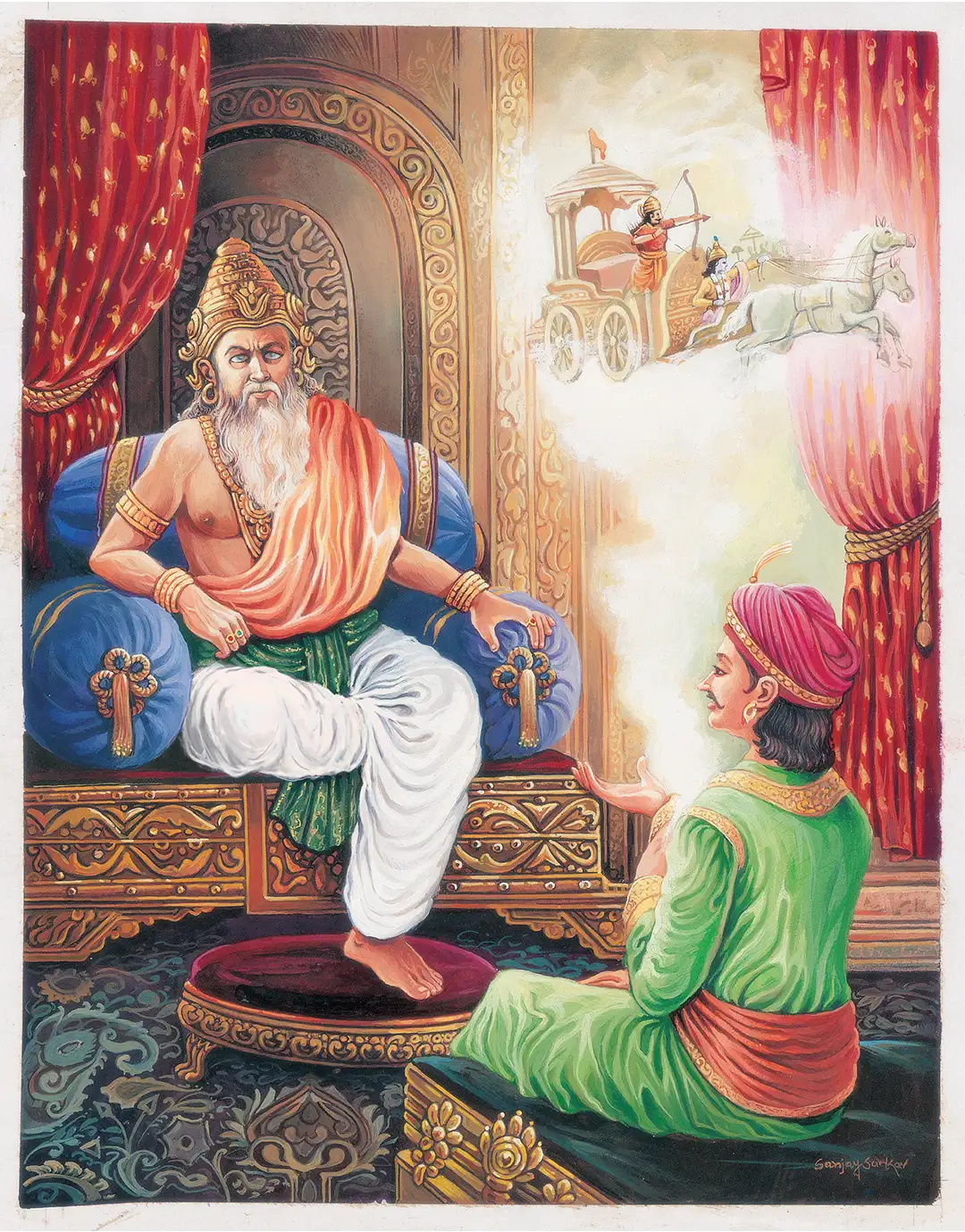
Navigate directly to the wisdom you seek

Start your day with the timeless inspiring wisdom from the Holy Bhagavad Gita delivered straight to your email!


Welcome 🙏
Here's what you've unlocked
Bookmarks
Save verses for quick return
Notes
Write your own reflections
Progress
Track all 18 chapters
Verse of the Day
A new shloka in your inbox daily